Your favorite silver ring was gleaming when you first wore it. Now it’s turned a dull brownish-gray. You’re wondering if it’s ruined — or if you need to buy a replacement.
Here’s the truth: tarnish is completely normal for sterling silver, and it’s almost always reversible. With the right cleaning routine and storage habits, your silver jewelry can look as good as the day you bought it — for years.
TL;DR — Three rules that prevent 90% of tarnish problems:
- Remove silver jewelry before swimming, showering, or cleaning
- Store in an airtight bag, not in a jewelry dish exposed to air
- Wipe with a soft cloth after each wear to remove skin oils and moisture
Why Sterling Silver Tarnishes
Sterling silver is 92.5% pure silver and 7.5% other metals — typically copper. This copper content is what causes tarnishing.
When copper contacts sulfur compounds in the air (from pollution, rubber, certain foods, and even your skin), it forms silver sulfide — the dark, dull coating you see on tarnished pieces. This is a chemical reaction, not a manufacturing defect.
A few factors that dramatically accelerate tarnishing:
- Humidity — moisture speeds up oxidation
- Body chemistry — some people’s skin is more acidic, reacting faster with silver
- Products — perfume, lotions, hairspray, and cleaning products all contain sulfur compounds or chemicals that attack silver
- Air exposure — leaving jewelry out on a dresser instead of storing it properly
The good news: silver sulfide sits on the surface of the metal. It can almost always be removed without damaging the piece underneath.
How to Clean Sterling Silver at Home
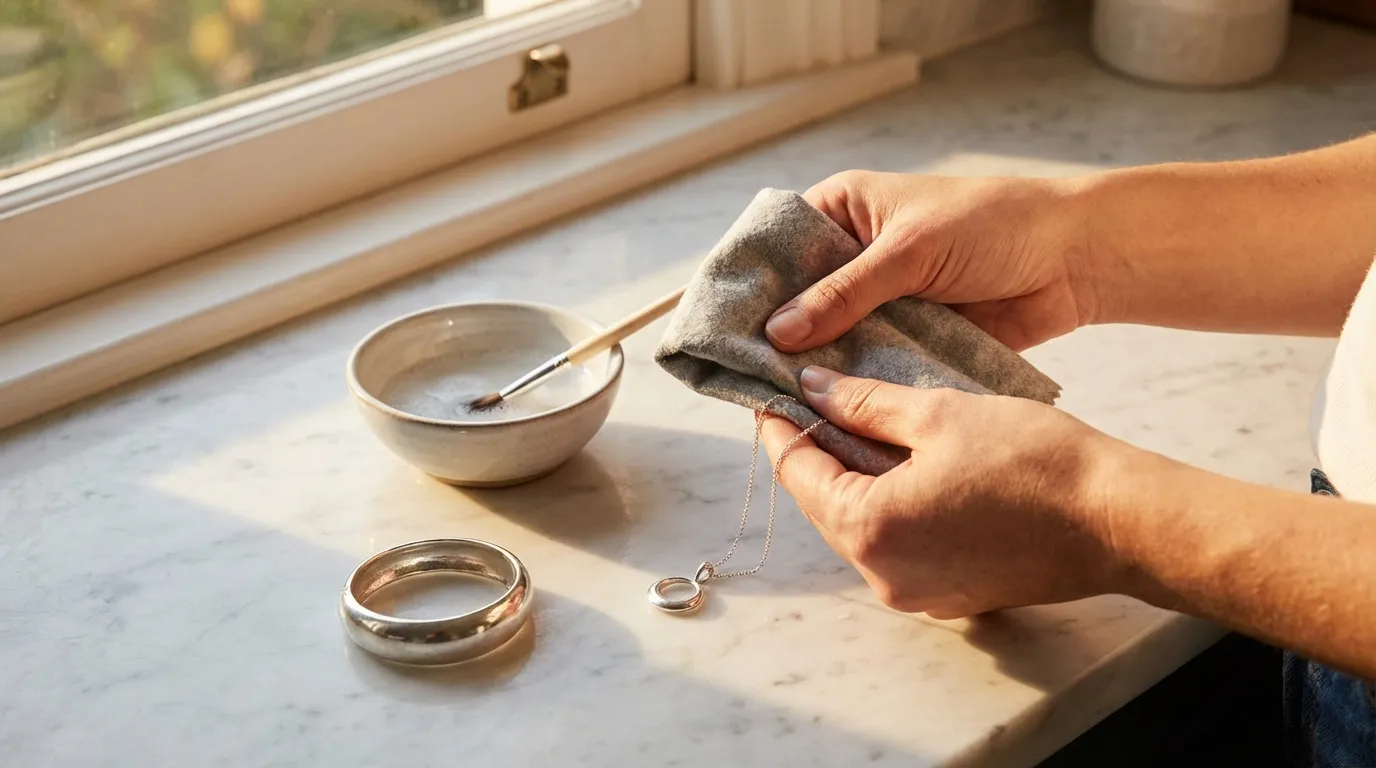
Method 1: Warm Water and Mild Soap (For Regular Cleaning)
This is your go-to routine for regular maintenance:
- Fill a small bowl with warm (not hot) water
- Add a few drops of mild, fragrance-free dish soap
- Soak the jewelry for 5-10 minutes
- Gently scrub with a soft-bristled toothbrush — especially around settings and chains
- Rinse thoroughly under warm running water
- Pat completely dry with a soft, lint-free cloth
Key: Make sure the piece is completely dry before storing. Any trapped moisture accelerates tarnishing.
Method 2: Baking Soda Paste (For Heavy Tarnish)
For pieces that have significant tarnish:
- Mix baking soda with just enough water to form a paste
- Apply to the jewelry with your fingers or a soft cloth
- Rub gently in circular motions — do not scrub aggressively
- Rinse thoroughly and dry completely
Caution: Do not use baking soda on pearls, opals, or gemstones with soft surfaces. And use sparingly — baking soda is mildly abrasive and can dull high-polish finishes over time if used too frequently.
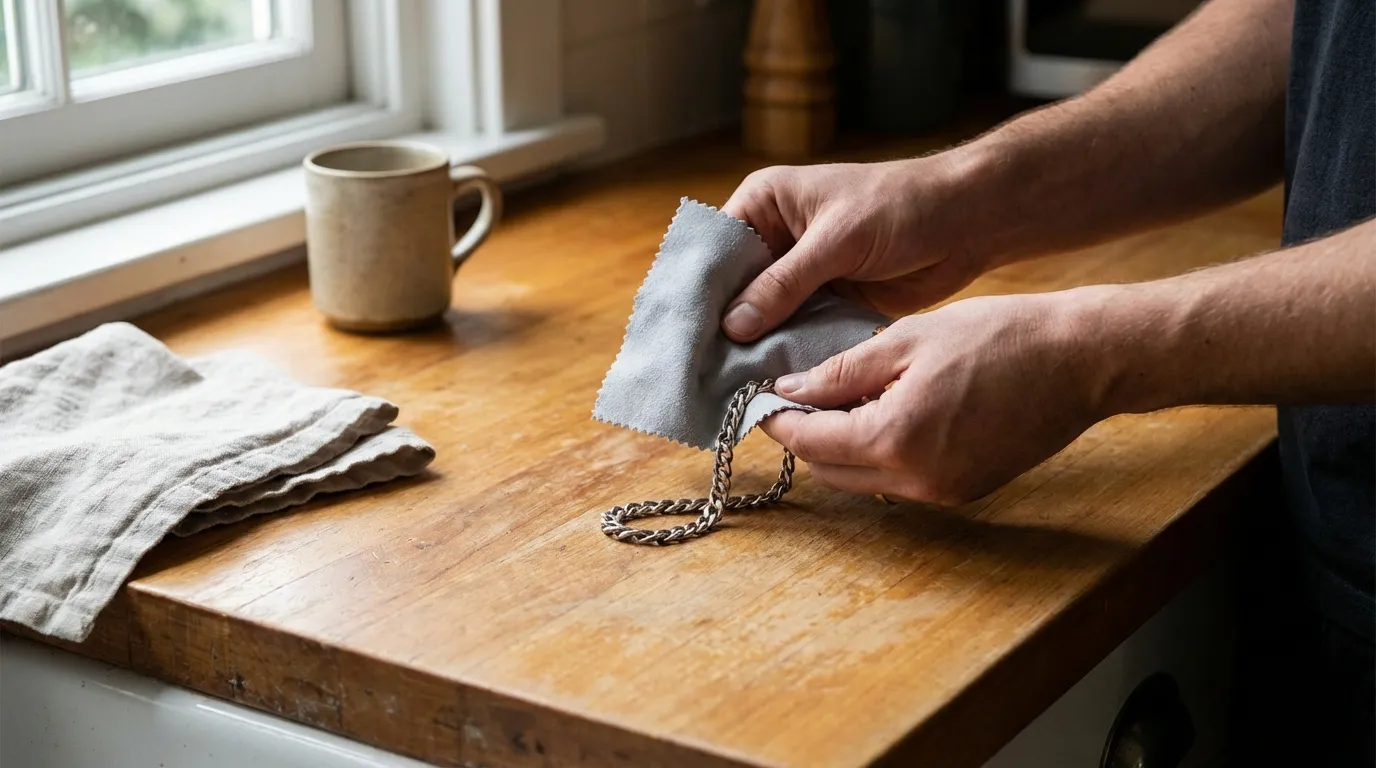
Method 3: Silver Polishing Cloth (For Quick Shine)
A silver polishing cloth (impregnated with mild cleaning agents) is the easiest everyday solution. A few gentle strokes on your silver piece removes light tarnish and restores shine in under a minute.
These cloths are inexpensive and available online. Keep one in your jewelry box for easy access.
What to Avoid
Certain things accelerate damage or can permanently harm your silver jewelry:
- Perfume and hairspray — Apply these before putting on jewelry. The chemicals attack silver surfaces within minutes.
- Chlorine — Swimming pools, hot tubs, and cleaning products containing bleach will strip plating and cause corrosion. Remove all jewelry before swimming or cleaning.
- The ocean — Salt water and sand are both damaging — salt accelerates oxidation, sand acts as an abrasive.
- Sleeping in jewelry — Sweat and pressure during sleep accelerate tarnishing and can bend delicate pieces.
- Toothpaste — A common home remedy that actually damages silver. Toothpaste is too abrasive for polished jewelry surfaces.
- Ultrasonic cleaners — Safe for some gemstones but can damage pearls, opals, and delicate settings.
How to Store Sterling Silver
Proper storage makes a bigger difference than cleaning frequency. Good storage habits can extend the time between cleanings by weeks:
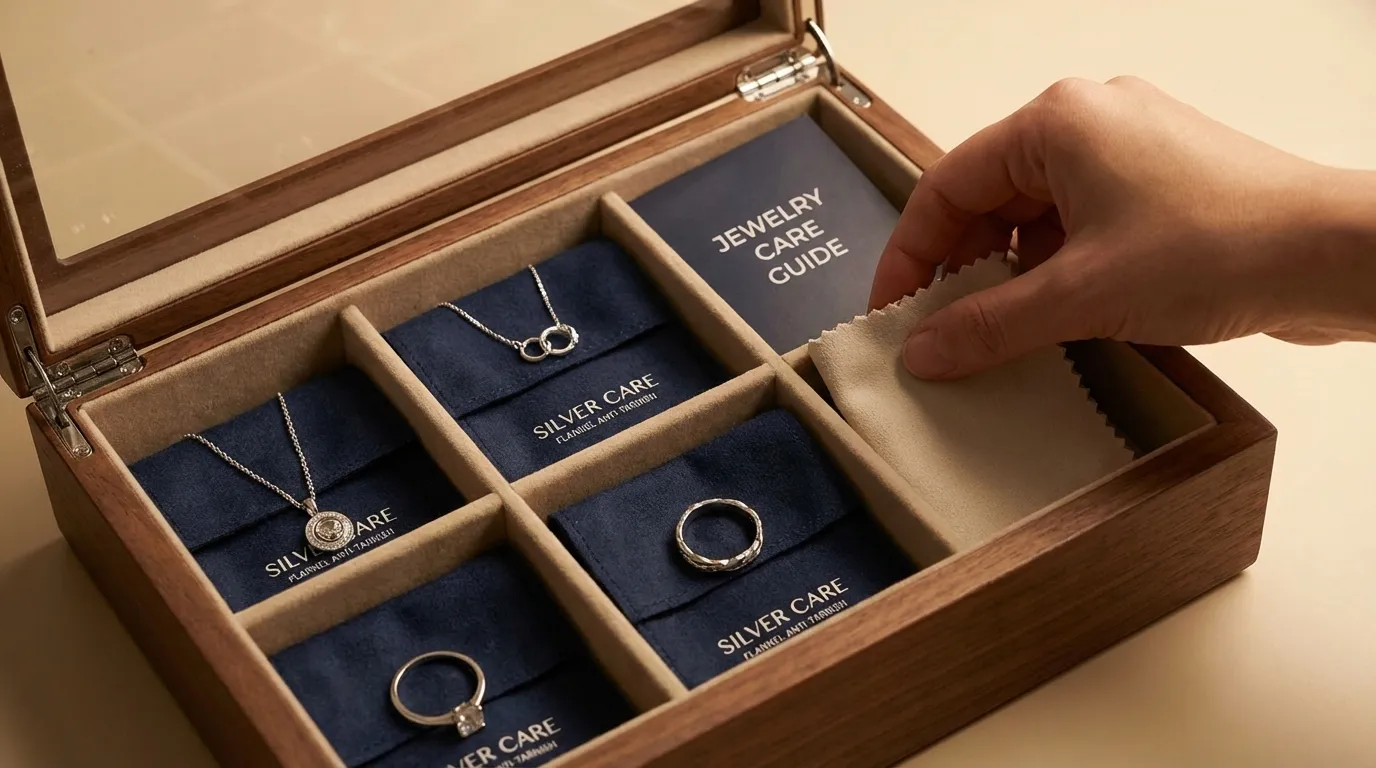
- Airtight bags — Small zip-lock bags (or purpose-made anti-tarnish pouches) dramatically slow tarnishing by limiting air exposure
- Separate storage — Store pieces individually to prevent scratching each other
- Away from sunlight — UV light can fade some gemstones and affects silver over time
- Cool, dry location — Avoid bathrooms (high humidity) and window ledges (temperature fluctuation)
- Silica gel packets — Toss one in your jewelry box or storage container to absorb moisture
- Anti-tarnish strips — These absorb sulfur compounds in the air and can be placed in storage boxes or drawers
A small felt jewelry roll stored in a drawer beats an open ceramic dish on a dresser — even if the dish looks nicer.
Rhodium-Plated vs Plain Sterling Silver Care
Many Goldmacher pieces feature a rhodium finish over the sterling silver base. Rhodium is a platinum-group metal that doesn’t tarnish and provides excellent protection for the silver underneath.
If your piece has rhodium plating:
- It will tarnish significantly slower than plain silver
- Avoid abrasive cleaning methods (baking soda paste, polishing cloths) — these can wear down the plating
- Stick to warm water, mild soap, and a soft cloth
- When the rhodium layer eventually thins (years of wear), the piece can be re-plated by a jeweler
For plain sterling silver pieces without plating, all the methods above apply. These pieces show their natural silver color and require slightly more maintenance to prevent tarnish.
If you’re looking for jewelry that’s easier to care for and safe for sensitive skin, our hypoallergenic jewelry guide explains how nickel-free metals and rhodium plating work together to protect both your skin and your jewelry.
Frequently Asked Questions About Sterling Silver Care
Why does sterling silver tarnish?
Sterling silver tarnishes because the copper in the 92.5/7.5 silver-copper alloy reacts with sulfur compounds in the air and on your skin. This oxidation creates silver sulfide — the dark layer you see on tarnished pieces. It’s a natural process, not a defect.
Can you shower with sterling silver jewelry?
It’s not recommended. Shampoo, conditioner, and body wash contain chemicals that accelerate tarnishing and can dull the surface of silver over time. More importantly, repeated water exposure — especially hot water — breaks down rhodium plating faster, eventually exposing the silver underneath.
How do you store sterling silver jewelry to prevent tarnish?
Store sterling silver in an airtight bag or anti-tarnish pouch, away from light and humidity. Keep pieces separate to prevent scratching. Add a small silica gel packet to absorb moisture. Avoid storing in bathrooms — the humidity dramatically accelerates tarnishing.
How often should I clean sterling silver jewelry?
Clean your silver jewelry every 2-4 weeks with a soft cloth if you wear it regularly. A deeper clean with mild soap and warm water every 1-2 months is sufficient for most wearers. Rhodium-plated pieces need less frequent cleaning than plain silver.
Ready to build your silver jewelry collection with pieces designed to last? Browse our necklaces and bracelets — all made with nickel-free 925 sterling silver that looks beautiful and stays that way with basic care.