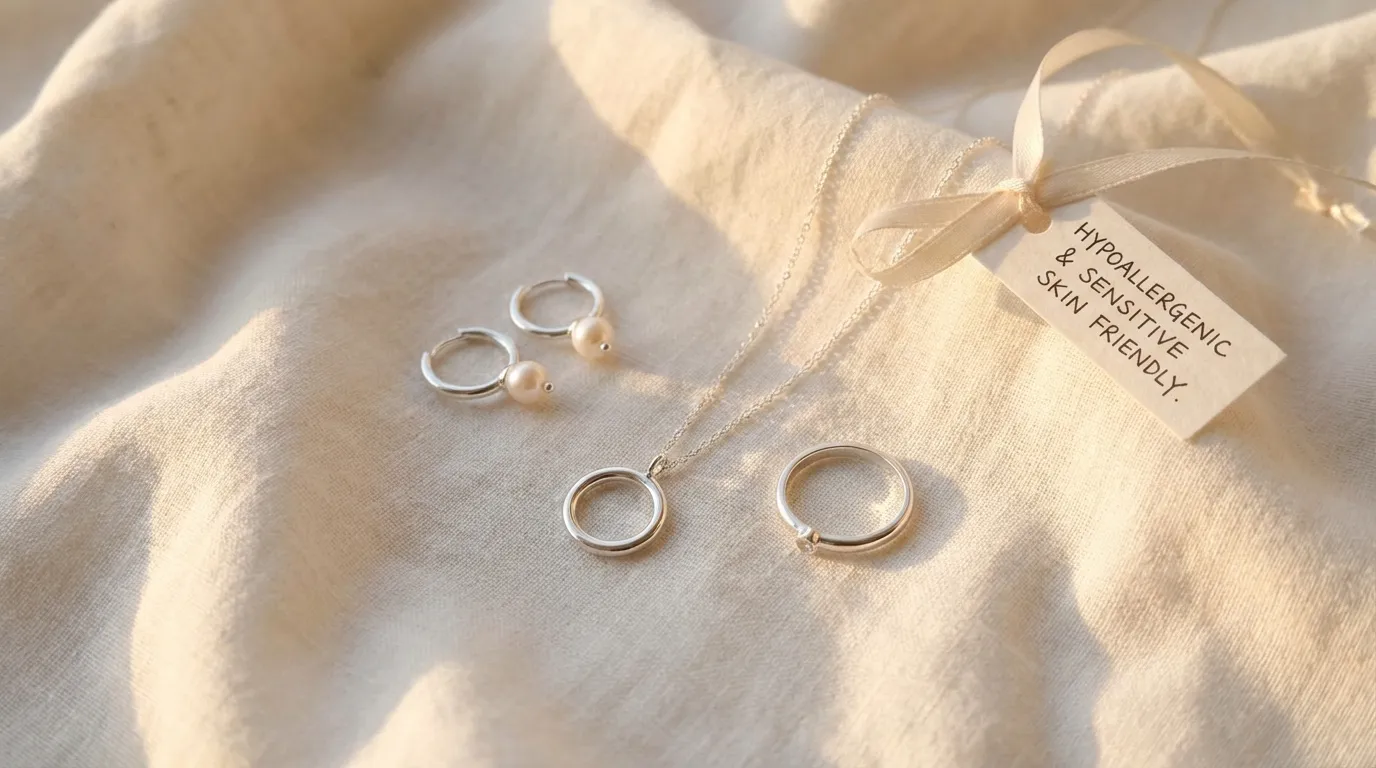
You bought a pair of earrings that looked beautiful online. Two days later, your ears are red, itchy, and inflamed. Sound familiar?
Jewelry allergies affect up to 17% of women and 3% of men — and nickel is almost always the culprit. The frustrating part is that cheap, nickel-containing jewelry is everywhere, often sold without any disclosure of its metal content.
The good news: hypoallergenic jewelry genuinely exists, and it works. You just need to know what to look for.
TL;DR — Safe metals at a glance:
| Metal | Hypoallergenic? | Notes |
|---|---|---|
| 925 Sterling Silver | Yes | Must be nickel-free |
| Rhodium-plated | Yes | Creates a protective barrier |
| Platinum | Yes | Most inert, rarely causes reactions |
| 18k+ Gold | Yes | Higher purity = lower allergy risk |
| Titanium | Yes | Ideal for post-surgery or extreme sensitivity |
| Copper | Sometimes | Can cause green staining, rarely allergic |
| Nickel | No | The #1 jewelry allergen |
| Brass / Zinc alloy | No | Usually contain nickel |
What Causes Jewelry Allergies?
The culprit is almost always nickel — a cheap metal used in countless alloys, including white gold under 18k, costume jewelry, surgical steel, and many “silver-tone” finishes.
When nickel contacts your skin and moisture (sweat, lotion, water), it releases nickel ions that penetrate the skin barrier. Your immune system treats these ions as invaders and mounts an inflammatory response: redness, itching, swelling, and blistering.
This reaction is called allergic contact dermatitis. Once your immune system is sensitized to nickel, it becomes more reactive with each exposure. That’s why symptoms can worsen over time even with the same jewelry.
Other less common allergens include:
- Cobalt — often found alongside nickel in alloys
- Chromium — used in some plating processes
- Copper — not typically allergenic, but can cause green discoloration
The solution isn’t to stop wearing jewelry — it’s to choose metals that don’t release allergenic ions.
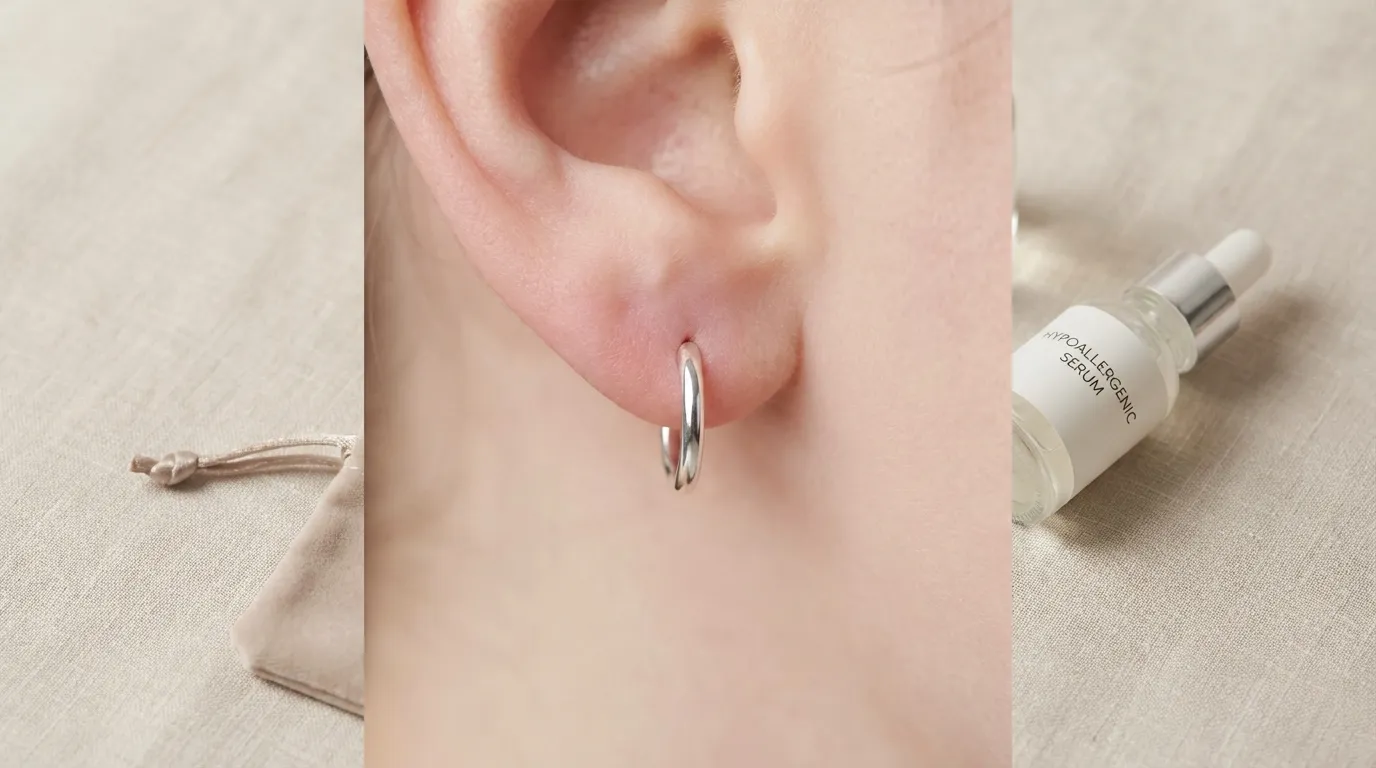
Safe Metals for Sensitive Skin
925 Sterling Silver
Sterling silver is 92.5% pure silver, with the remaining 7.5% usually being copper. Quality sterling silver is nickel-free by composition, making it an excellent hypoallergenic option.
The key word is “quality.” Low-grade silver-tone items may be silver-plated brass or zinc alloy — which almost always contain nickel. Always look for the 925 hallmark and a “nickel-free” guarantee from the seller.
Rhodium Plating
Rhodium is a platinum-group metal that is extremely inert — it doesn’t react with skin chemistry at all. Jewelry with a rhodium finish (like Goldmacher’s rhodium-plated collection) benefits from a physical barrier that separates your skin from the base metal entirely.
Rhodium plating also has the bonus of being highly scratch-resistant and maintaining a bright, white finish without tarnishing.
Platinum
Platinum is the gold standard for hypoallergenic jewelry. It’s naturally white, extremely dense, and almost never causes allergic reactions. The downside: it’s significantly more expensive than silver or gold. Platinum engagement rings often cost 30-40% more than gold equivalents.
14k-18k Gold
Gold itself is hypoallergenic. The problem is the alloys. 10k gold is only 41.7% pure — the rest is often nickel-containing alloys. As you move to 14k (58.3% pure) and 18k (75% pure), the nickel content drops significantly.
If you’re sensitive to gold jewelry, it’s usually the alloy content, not the gold itself. Switching to 18k or higher often resolves the reaction.
How to Test If Your Jewelry Is Hypoallergenic
Before wearing an unknown piece, you can test it at home:
-
Dimethylglyoxime (DMG) test — These nickel test kits cost under $20 and are available online. Wet the swab with the test solution, rub it on the metal, and press onto the test strip. A pink color means nickel is present.
-
Ask for a certificate — Reputable sellers can provide a composition certificate or material safety data sheet (MSDS) for their metals.
-
Start with short wear — New to a piece? Wear it for 30 minutes on your inner wrist (highly sensitive skin). If no reaction after 24 hours, it’s likely safe for you.
-
Check the hallmark — 925, PT950, 18K are hallmarks that indicate quality metals with low allergy risk.
Why Goldmacher Is 100% Hypoallergenic and Nickel-Free
Every piece in the Goldmacher collection is made with nickel-free 925 sterling silver as the base metal. This isn’t a marketing claim — it’s a material specification enforced at sourcing.
Our plated finishes — gold, rose gold, and rhodium — are applied over this sterling silver base, creating multiple layers of protection. The rhodium topcoat on our white pieces adds an extra inert barrier that even people with extreme nickel sensitivity wear without issue.
We don’t use zinc alloy, brass, or any base metal that contains nickel. If you’ve struggled to find jewelry you can wear for more than an hour without a reaction, our collection was built for you.
Explore our hypoallergenic collections:
- Earrings — studs, hoops, and drops, all nickel-free
- Rings — everyday wear and statement pieces
- Necklaces — pendants and chains safe for sensitive skin
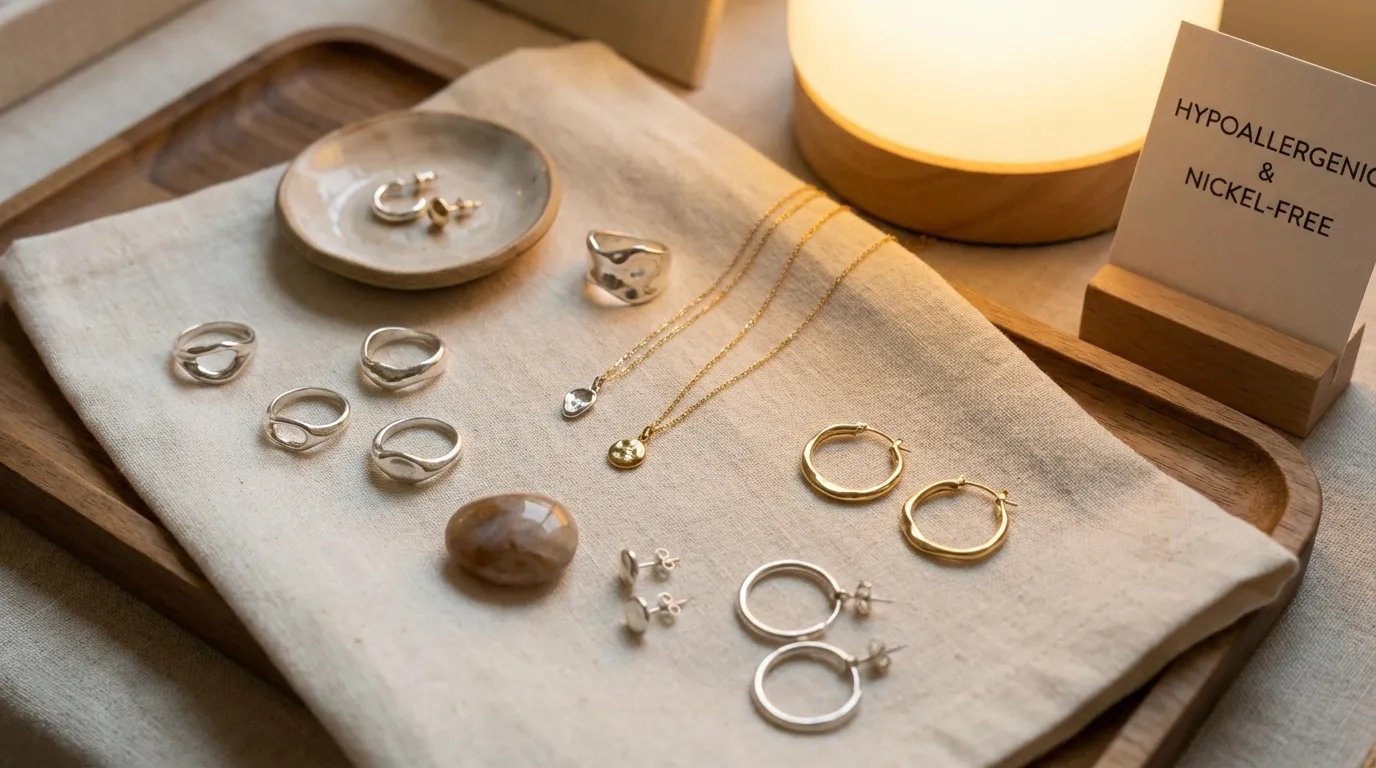
How to Care for Hypoallergenic Jewelry
Even the best hypoallergenic jewelry benefits from proper care to stay reactive-free and beautiful:
- Remove before swimming — Chlorine and salt water can degrade plating over time
- Apply perfume and hairspray before putting on jewelry — Chemicals in these products can damage metal surfaces
- Clean with warm water and mild soap — Pat dry thoroughly; trapped moisture against skin can trigger reactions even with safe metals
- Store separately — Storing jewelry together causes scratching; damaged plating exposes the base metal
For a full care routine, see our sterling silver care guide — the same principles apply to all Goldmacher pieces.
And when you’re ready to explore jewelry made for sensitive skin, our entire collection uses the same nickel-free 925 sterling silver standard. You can shop with confidence that every piece has been made with your skin in mind.
Frequently Asked Questions About Hypoallergenic Jewelry
What metals are hypoallergenic for jewelry?
The safest metals for sensitive skin are 925 sterling silver, platinum, 18k or higher gold, titanium, niobium, and rhodium. These metals contain minimal or no nickel, which is the most common cause of jewelry allergies.
Is 925 sterling silver hypoallergenic?
Yes, 925 sterling silver is considered hypoallergenic for most people. It is 92.5% pure silver and 7.5% other metals, typically copper — not nickel. Goldmacher uses nickel-free 925 sterling silver in all pieces, making them safe for sensitive skin.
How can I tell if my jewelry is hypoallergenic?
Look for jewelry labeled 925 sterling silver, solid gold (14k+), platinum, or titanium. Check that the seller explicitly states “nickel-free.” You can also perform a nickel test: buy a dimethylglyoxime test kit and swab the metal — a pink reaction means nickel is present.
Is rhodium plated jewelry safe for sensitive skin?
Yes. Rhodium plating creates a barrier between skin and the base metal, making rhodium-plated jewelry safe even if the base contains trace allergens. Goldmacher’s rhodium-plated pieces are finished with a thick, durable rhodium layer over 925 sterling silver for maximum protection.
Ready to shop jewelry that won’t irritate your skin? Browse our full hypoallergenic jewelry collection — every piece nickel-free, every metal tested, every finish safe for sensitive skin.