You’ve heard of moissanite. You’ve heard of cubic zirconia. Both are affordable alternatives to diamonds. Both look dazzling in a jewelry store window. And both will cost you a fraction of what a natural diamond rings up for.
But they’re not the same — not even close. And choosing the wrong one can mean replacing your jewelry within a couple of years.
This guide breaks down the real difference between moissanite and cubic zirconia so you can make the choice that actually makes sense for your situation.
Quick Answer: Moissanite vs Cubic Zirconia
Short version: Moissanite is harder, more brilliant, and built to last a lifetime. Cubic zirconia is cheaper but scratches easily and loses its sparkle over time. If you’re buying for daily wear or long-term use, moissanite is the clear winner. If you’re buying for occasional fashion jewelry on a tight budget, CZ can work.
The Side-by-Side Comparison
| Feature | Moissanite | Cubic Zirconia |
|---|---|---|
| Hardness (Mohs) | 9.25 | 8.0–8.5 |
| Refractive Index | 2.65 | 2.15–2.18 |
| Fire (Dispersion) | 0.104 | 0.058–0.066 |
| Price (1 carat equivalent) | $300–$600 | $20–$100 |
| Longevity | Lifetime | 1–3 years (daily wear) |
| Ethical Status | Lab-created, conflict-free | Lab-created, conflict-free |
| Brilliance | Very high (rainbow fire) | Moderate (glass-like) |
| Scratches easily? | No | Yes, over time |
What is Cubic Zirconia?
Cubic zirconia (CZ) is a lab-created crystalline form of zirconium dioxide. It was developed in the 1970s as a synthetic diamond simulant and quickly became one of the most popular diamond alternatives in fashion jewelry.
CZ is optically flawless when new — it’s colorless, highly transparent, and cuts beautifully. That’s why it looks so impressive in a store. The problem shows up over time.
Because CZ has a Mohs hardness of only 8.0–8.5, it’s softer than everyday materials like quartz (which makes up dust and sand). Over months of daily wear, microscopic scratches accumulate. The surface loses its polish. The stone starts to look foggy or dull. For a ring worn every day, this typically happens within 1–3 years.
CZ is also significantly denser than diamond or moissanite — a 1-carat CZ stone is visually smaller than a 1-carat moissanite or diamond of the same weight.
What is Moissanite?
Moissanite is silicon carbide — a material originally discovered in 1893 inside a meteorite crater by French Nobel Prize-winning chemist Henri Moissan. Natural moissanite is extraordinarily rare. All moissanite in jewelry is lab-created, grown under controlled conditions to achieve maximum clarity and brilliance.
What makes moissanite stand out:
- Hardness: At 9.25 on the Mohs scale, moissanite is the second hardest gemstone used in jewelry — harder than sapphire (9.0) and only just below diamond (10). It won’t scratch from daily wear.
- Brilliance: Moissanite’s refractive index of 2.65 is higher than diamond (2.42) and far higher than CZ (2.15–2.18). It bends and returns light with exceptional intensity.
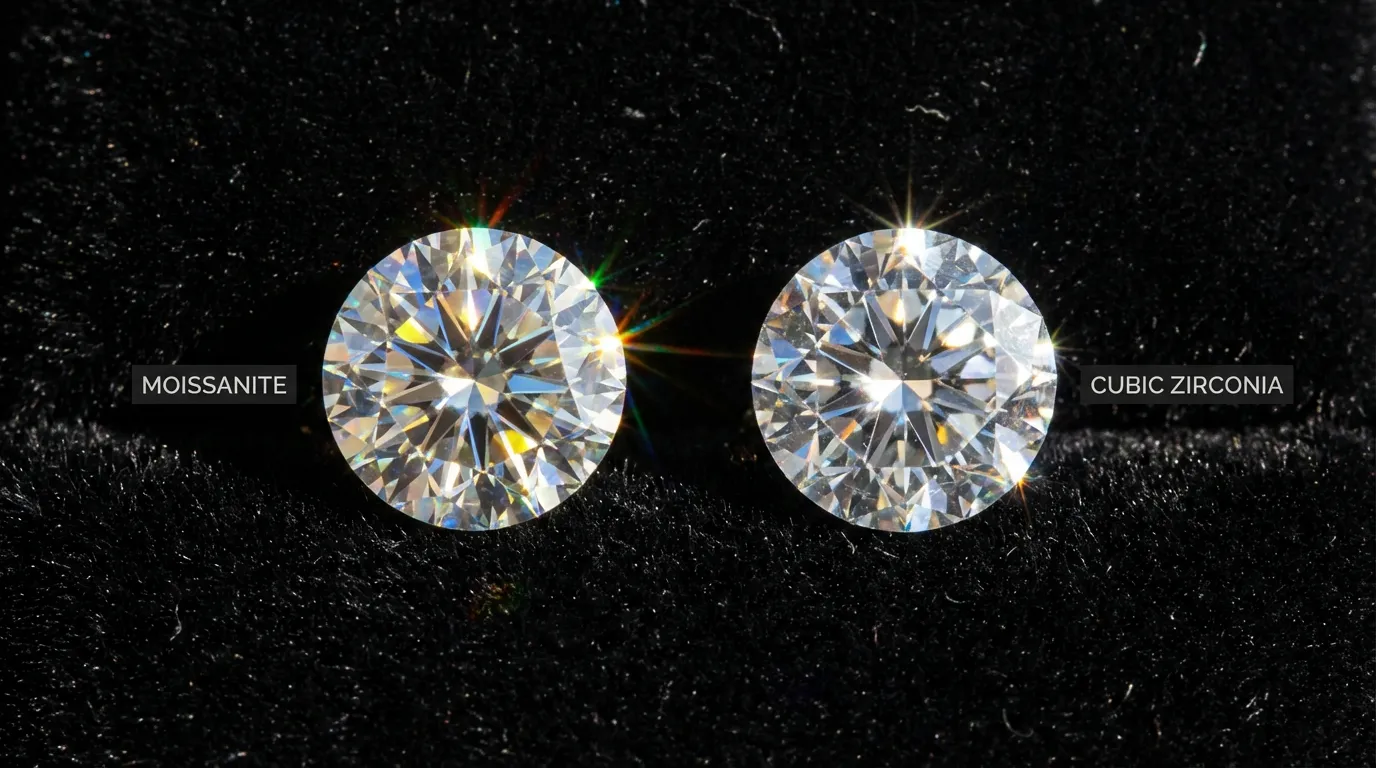
- Fire: Its dispersion rate of 0.104 is more than double that of cubic zirconia. Under natural light, moissanite produces vivid rainbow flashes — far more than CZ.
- Longevity: Moissanite doesn’t cloud, scratch, or lose its sparkle over time. A well-made moissanite ring can look the same in 30 years as it does today.
The Key Differences
Durability for Daily Wear
This is where the real difference lives. Cubic zirconia, despite looking impressive when new, is not built for everyday rings. It’s soft enough that dust particles — which contain quartz — can scratch the surface during normal activity.
Moissanite, at 9.25 on the Mohs scale, is essentially scratch-resistant for practical purposes. It’s harder than any material it’s likely to encounter in daily life. This is why moissanite is the go-to choice for engagement rings and pieces that see heavy everyday use.
If you’re buying a ring you plan to wear every day, CZ is a false economy. You’ll likely need to replace the stone or the piece within a few years. Moissanite is a one-time purchase.
Brilliance and Light Performance
CZ looks beautiful when new. But it produces a more glass-like sparkle compared to moissanite. Side by side, moissanite shows noticeably more fire — those colorful rainbow flashes — and more overall light return.
Some people prefer CZ’s simpler sparkle because it’s closer to how a diamond looks (diamonds have less fire than moissanite). If you want something that closely mimics a diamond’s understated brilliance, CZ might actually be the preference. If you want maximum sparkle, moissanite wins.
Price
This is where CZ holds its advantage. Cubic zirconia is dramatically cheaper — a quality 1-carat CZ can cost $20–$100. A 1-carat moissanite runs $300–$600.
But cost-per-wear tells a different story. If CZ needs replacing every 2–3 years and moissanite lasts a lifetime, moissanite is often the better financial decision over a 5–10 year horizon.
When to Choose Each
Choose moissanite if you:
- Want a piece for daily wear (especially rings)
- Value long-term durability and brilliance retention
- Are buying an engagement ring or heirloom piece
- Want the closest visual experience to a diamond, but with more fire
- Are comfortable spending $300–$600 per carat for a lifetime piece
Choose cubic zirconia if you:
- Are buying fashion jewelry for occasional wear
- Have a very tight budget and plan to replace pieces
- Want to match a specific look or color (CZ comes in a wide color range)
- Are buying for a short-term occasion (event jewelry, costume pieces)
Which Is Better for Engagement Rings?
Moissanite, without question.
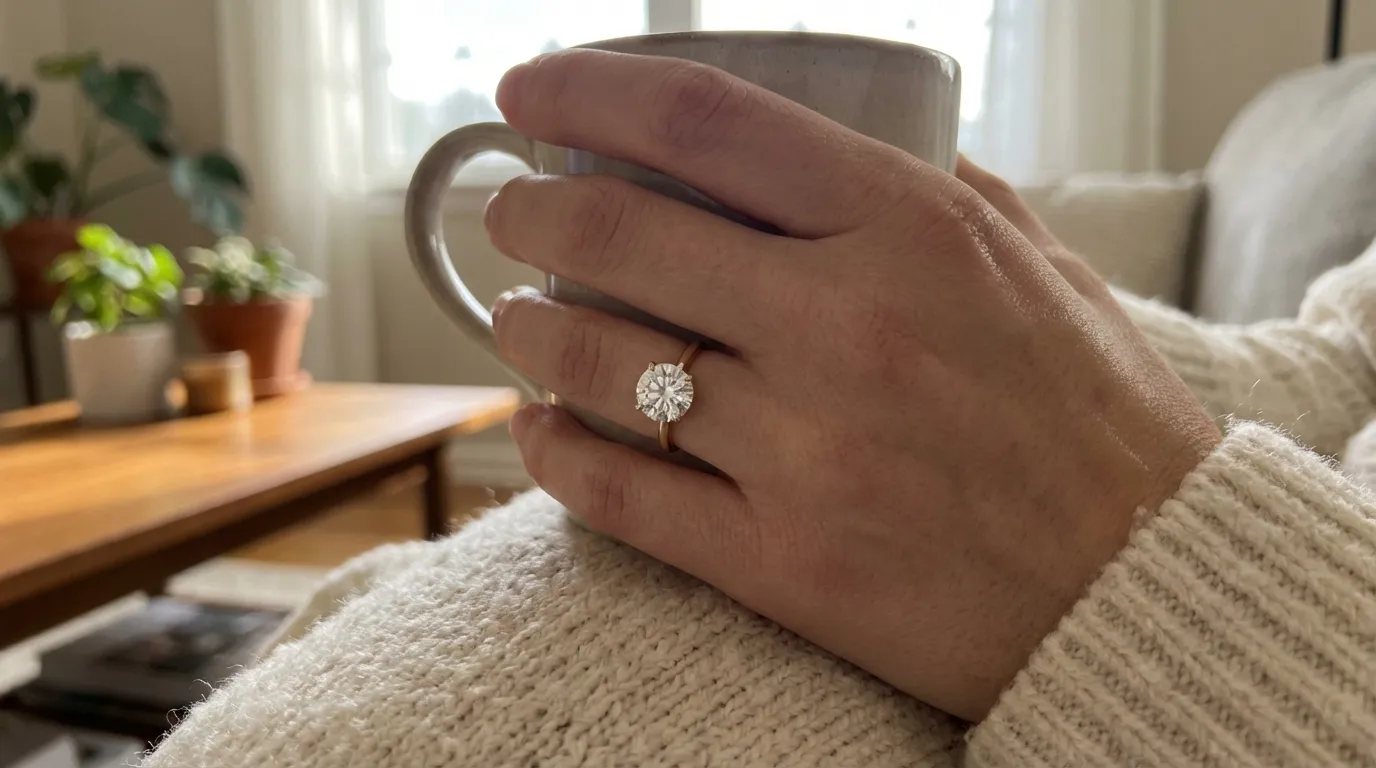
An engagement ring is meant to last decades. The durability gap between moissanite (9.25) and cubic zirconia (8–8.5) becomes significant over time. You don’t want to see your engagement ring go cloudy and dull within a few years of daily wear.
Moissanite’s superior hardness, lifelong brilliance, and ethical lab-created origin make it the ideal choice for meaningful, long-term pieces like engagement rings. It also holds up for resizing and re-setting — which matters as taste and ring styles evolve.
Cubic zirconia is simply not designed for this purpose.
Internal Links and Further Reading
Want to understand where moissanite sits in the broader gem landscape? Our complete guide to moissanite vs diamond covers the full comparison — brilliance, durability, price, and ethics — if you’re also weighing moissanite against the original. For more background on the gem itself, read everything you need to know about moissanite.
Shop by Gemstone
Ready to choose? Browse our collections:
- Moissanite Collection — Lab-created moissanite set in 925 sterling silver, hypoallergenic, free shipping to Canada and the US
- Zircon Collection — Quality zircon pieces for fashion-forward jewelry at accessible price points
Frequently Asked Questions
Is moissanite better than cubic zirconia? For most buyers, yes. Moissanite is significantly harder (9.25 vs 8–8.5 on Mohs scale), more brilliant, and far more durable for daily wear. Cubic zirconia scratches and loses its shine over time, while moissanite maintains its brilliance indefinitely.
Does cubic zirconia look like moissanite? Both can look similar to diamonds at first glance, but they behave differently under light. Moissanite has a higher refractive index and produces more fire. Cubic zirconia looks glassier and loses sparkle more quickly as it scratches over time.
How long does cubic zirconia last? Cubic zirconia typically shows visible wear within 1–3 years of daily use. Moissanite, by contrast, is rated for a lifetime of wear without losing brilliance.
Conclusion
Moissanite and cubic zirconia are both legitimate diamond alternatives — but they serve different purposes. CZ is a budget-friendly option for occasional-wear fashion jewelry. Moissanite is the right choice for everyday rings, engagement jewelry, and any piece where you expect lasting brilliance.
If longevity matters to you, moissanite is the smart pick. Spend once, wear forever.
Explore our Moissanite Collection and find the piece that fits your style — ethically made, hypoallergenic, and crafted to sparkle for a lifetime.