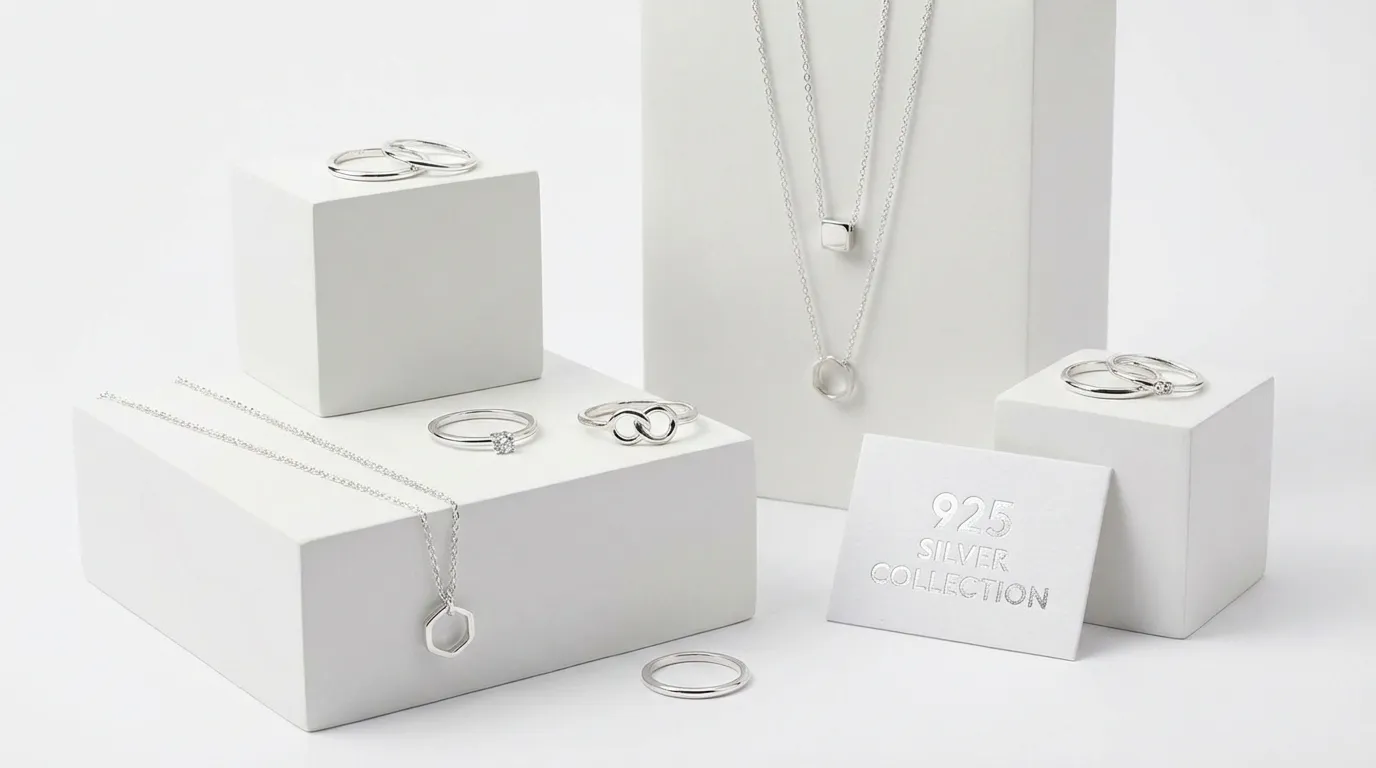
You’re shopping for a silver necklace, you flip it over, and there it is — a tiny stamp that reads “925.” You’ve seen it before, but what does it actually mean? And does it matter?
TL;DR: 925 means the piece contains 92.5% pure silver + 7.5% alloy metals (usually copper). This ratio is the global quality standard for sterling silver — strong enough for daily wear, pure enough to be genuine silver.
Let’s break down everything you need to know.
What Does 925 Mean?
The number 925 is a hallmark — a standardized purity stamp used worldwide to certify metal content in jewelry.
For silver, the 925 hallmark means:
- 92.5% pure silver (the main component)
- 7.5% other metals (typically copper, sometimes zinc or germanium)
This blend is called sterling silver, and it’s been the benchmark for quality silver jewelry for centuries. You’ll see it stamped as 925, .925, or S925 depending on the piece and its country of origin.
The hallmark system exists to prevent fraud. Without it, sellers could pass off lower-quality silver alloys or silver-plated brass as genuine silver jewelry.
Sterling Silver vs Silver vs Silver-Plated
Not all “silver” jewelry is the same. Here’s how the main types compare:
| Type | Silver Content | Durability | Tarnish Risk | Price |
|---|---|---|---|---|
| Fine Silver (.999) | 99.9% | Low — very soft | Low | Highest |
| Sterling Silver (.925) | 92.5% | High — wear-resistant | Moderate | Mid-high |
| Silver-Plated | Trace amounts | Low — plating wears off | High (base metal) | Low |
| Silver-Filled | 5-10% silver | Moderate | Moderate | Low-mid |
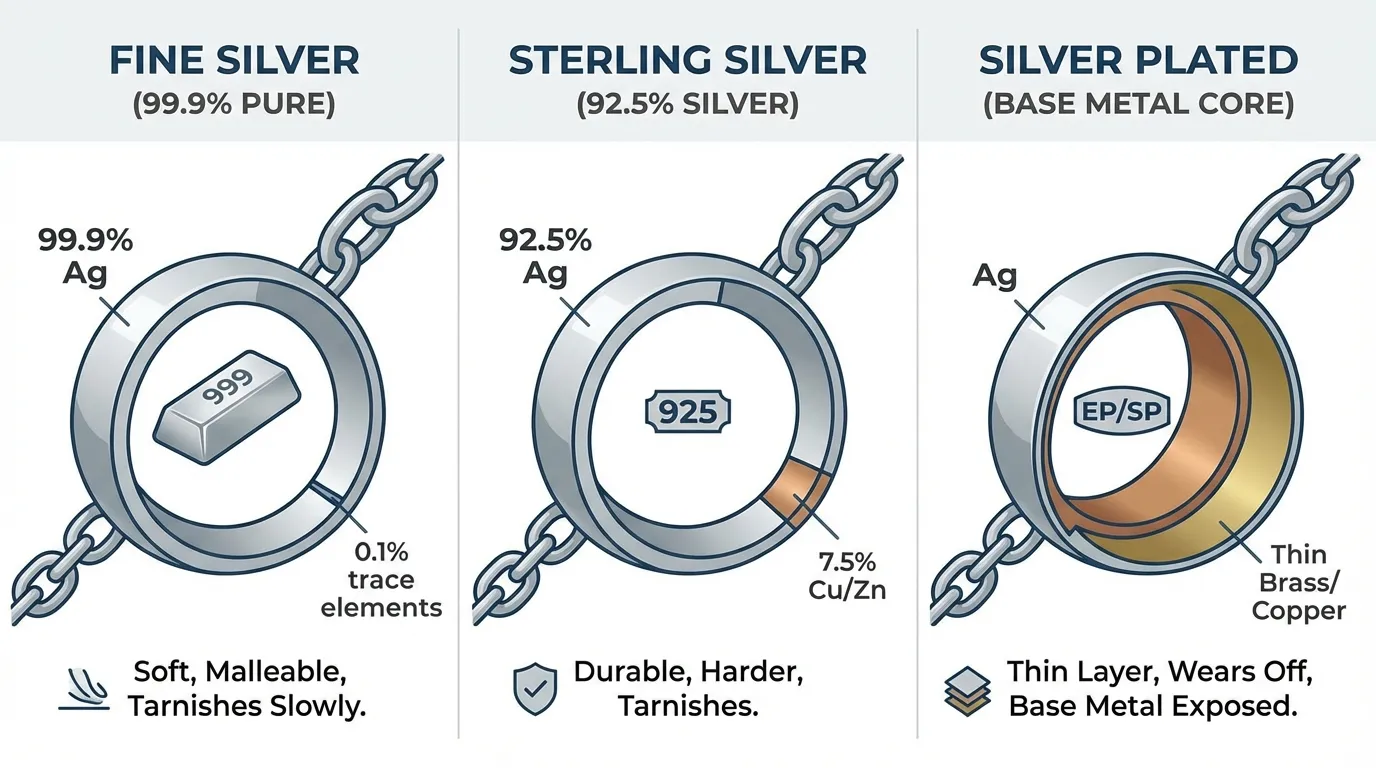
The key insight: fine silver is actually worse for jewelry because it’s too soft. Rings and bracelets made from 99.9% silver bend and scratch easily with daily wear. The 7.5% alloy in sterling silver is what gives it the hardness needed to hold gemstones, maintain shape, and last decades.
Silver-plated jewelry is in a completely different category — it’s a base metal (brass, copper, or zinc) with a thin silver coating that wears off over time. Once the plating is gone, you’re left with the base metal. Sterling silver is solid throughout.
Why 925 Is the Global Quality Standard
The 92.5% / 7.5% ratio isn’t arbitrary. Jewelers have refined it over hundreds of years of practical experience.
Too much purity (99.9%) = too soft. Fine silver dents with light pressure, prong settings loosen quickly, and rings lose their shape. Beautiful for display pieces, impractical for jewelry you wear daily.
Too little purity = too many problems. Lower-grade silver alloys (800 silver, for example) tarnish faster, can cause skin reactions from higher copper or nickel content, and don’t have the same visual brilliance.
The 925 standard hits the sweet spot: enough silver for genuine beauty and value, enough alloy for real-world durability. That’s why it became the default for professional jewelry-making worldwide.
Rhodium Plating on Sterling Silver
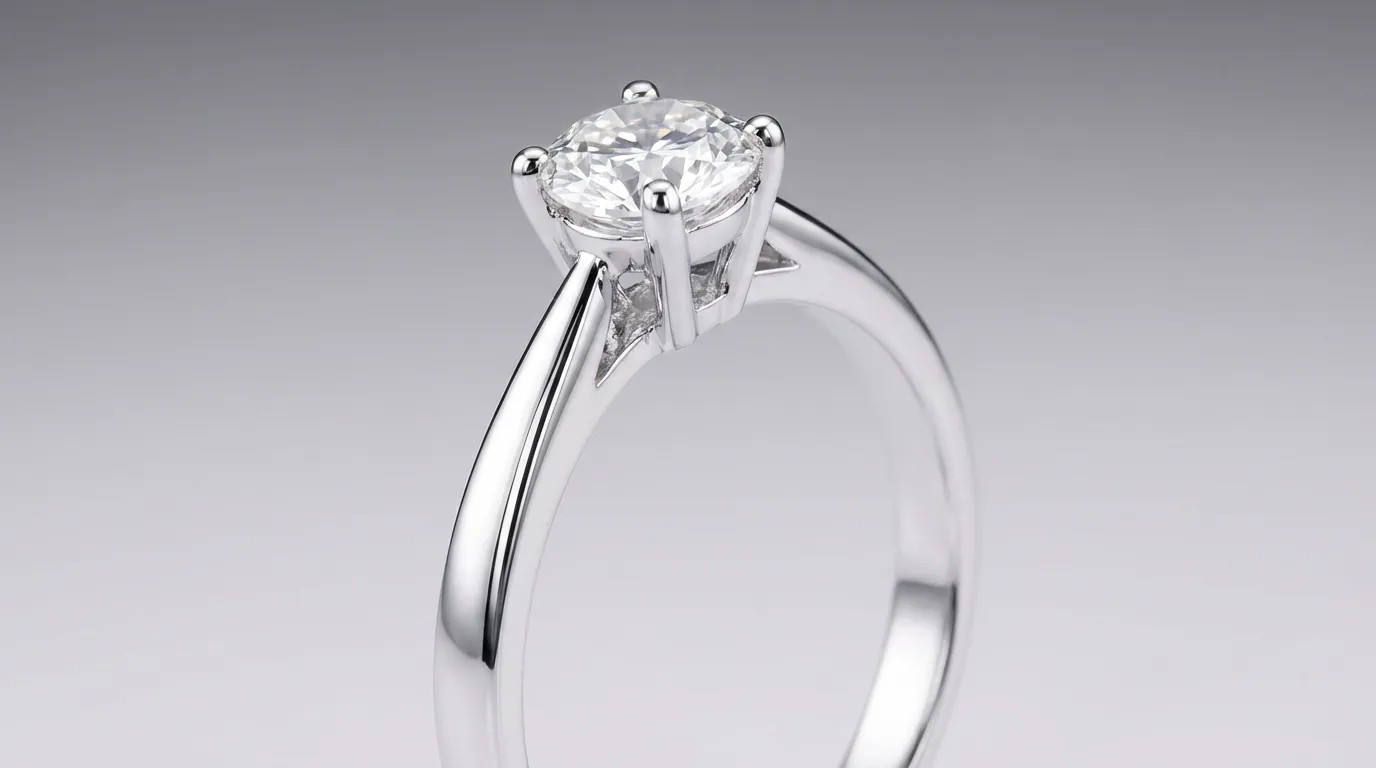
Many 925 sterling silver pieces — including most of the jewelry at Goldmacher — are finished with rhodium plating.
Rhodium is a platinum-group metal with several useful properties for jewelry:
- Extremely hard (harder than silver itself)
- Bright white finish that enhances gemstone sparkle
- Anti-tarnish barrier that dramatically slows oxidation
- Nickel-free and hypoallergenic
When 925 sterling silver is rhodium-plated, you get the structural integrity of sterling silver with the added protection and shine of rhodium. The result is jewelry that stays brighter longer, resists scratches, and maintains its appearance with minimal maintenance.
If you want to dive deeper into how rhodium compares to gold and rose gold plating options, check out our complete guide to plating differences.
How Goldmacher Uses 925 Sterling Silver
Every piece of jewelry at Goldmacher is made from 925 sterling silver. Here’s what that means for you:
- No base metal fillers. The foundation of every ring, necklace, bracelet, and pair of earrings is genuine sterling silver — not silver-plated brass.
- Nickel-free. Our alloy mix uses copper, not nickel, making our pieces safe for sensitive skin and people with metal allergies.
- Rhodium or gold plating applied over 925 silver. The plating enhances aesthetics and protection without compromising the sterling silver core.
- Hallmarked pieces. The 925 stamp is your guarantee of composition.
For customers with sensitive skin, our approach means you get the full benefit of hypoallergenic jewelry without needing to compromise on quality or style.
How to Care for 925 Sterling Silver
Sterling silver is durable, but it does require basic care to keep its appearance over time.
Do:
- Polish with a soft silver cloth when tarnish appears
- Store in an airtight bag or box when not wearing
- Remove before swimming, showering, or applying perfume
- Clean gently with mild soap and warm water for deeper cleaning
Avoid:
- Chlorine (bleach, pools) — it damages the metal and tarnish protection
- Harsh chemicals (cleaners, acetone, hydrogen peroxide)
- Leaving pieces in humid environments for extended periods
Want the full step-by-step care routine? Read our how to care for sterling silver jewelry guide.
The Bottom Line
The 925 stamp is your assurance that you’re buying real silver jewelry built to last. It’s not a compromise — it’s the professional standard. Fine silver is too soft for daily wear; silver-plated jewelry isn’t silver at all. Sterling silver at 925 is the quality benchmark for good reason.
When you shop at Goldmacher, every piece meets this standard. The 925 hallmark is our baseline commitment, not a selling point.
Ready to explore our sterling silver collection? Browse our necklaces, rings, and earrings — all crafted in nickel-free 925 sterling silver and finished to last.